North Wilts Canal Junction
body {font-family: arial; margin:1} p {text-align: left; padding: 0% 2%} North Wilts Canal Junction

Historic Map

Your browser does not support the audio element.

The North Wilts junction was opened between 1814-19, which was the period when the North Wilts canal was constructed.

Narrowboats leaving the North Wilts canal would either turn left going east towards Abingdon, now Fleming way or west towards Semington, which is now pedestrianised and called Canal walk.

John Street/ Stone Bridge
body {font-family: arial; margin:1} p {text-align: left; padding: 0% 2%} John Street/ Stone Bridge

Historic Map

Your browser does not support the audio element.

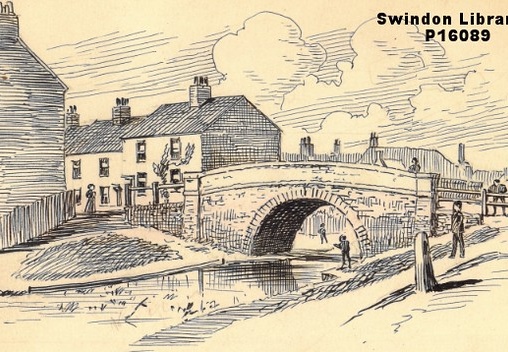
John Street bridge or Stone bridge was a stone single arch bridge, built in 1814 for the Canal Company.

This bridge was demolished between 1920-22.

The bridge was alleged to have been named after John Harding Sheppard, the owner of the land on which it was built.

There was a wharf adjacent on the north bank.
Fleet Street/ New Bridge
body {font-family: arial; margin:1} p {text-align: left; padding: 0% 2%} Fleet Street Bridge/ New Bridge

Historic Map

Your browser does not support the audio element.

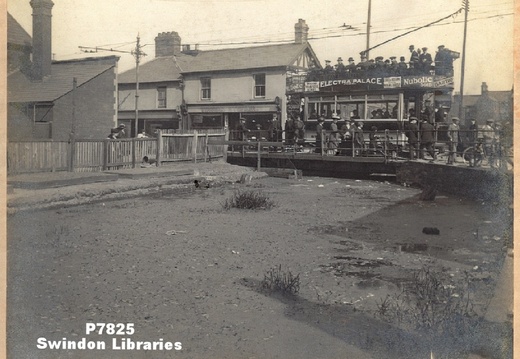
Fleet Street Bridge or New Bridge was a steel flat swing bridge, built in 1878 for the Swindon Local Board.

The swinging portion over the canal was only 12 foot long and was moved by a turntable. Sometime before 1885 a raised footbridge was added on the south side, but then removed by 1890.

In 1904 the bridge was strengthened for a tramway and in 1916 converted to an embankment.
Bullens Bridge
Bullens Bridge
body {font-family: arial; margin:1} p {text-align: left; padding: 0% 2%} Bullen's Bridge

Historic Map

Your browser does not support the audio element.

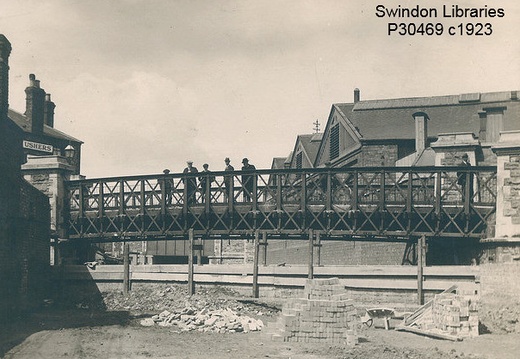
Bullen's bridge also known as Union canal bridge, Sheppards bridge or Station road bridge was a steel flat road bridge with trellis side rails and was built in 1853 by Brotherhood of Chippenham for the Swindon Corporation.

The Devizes & Wiltshire Gazette reported in July 1853 that “An iron bridge has been erected by the Great Western Railway Company, over the Wilts and Berks Canal, by which means communication is opened from New Swindon and parts adjacent, direct to the Railway station. The bridge presents a very neat appearance, and is the model one which was placed in the Great Exhibition of 1851, having been manufactured by Mr. Brotherhood.”

This bridge was demolished in 1923.

Adjacent to the bridge was the Union Railway Inn, later called the Union Hotel and then the Union Tavern, it was built in 1840 by John Sheppard who owned much of the surrounding land.

Richard Bullen managed the beerhouse between 1873-80, he was a larger than life character who ended up having a bridge named after him.

This building was demolished in 1958.

Railway Bridge/ Sheppard's Street Underpass
body {font-family: arial; margin:1} p {text-align: left} Railway Bridge/ Sheppard Street underpass

Historic Map

Your browser does not support the audio element.

Railway bridge or Sheppards street underpass was built of stone between 1840-41 by the Great Western Railway to carry the main line between Bristol and Paddington.

The bridge originally had a width of 49 feet, then in 1872 to accommodate more railway lines it was widened to 146 feet using brick and steel and then widened again in 1899 to 351 feet.

The last widening involved the demolition of a small arch bridge to the north called Crown or Woodham's bridge.

Today the canal line is a footpath and cycle track.
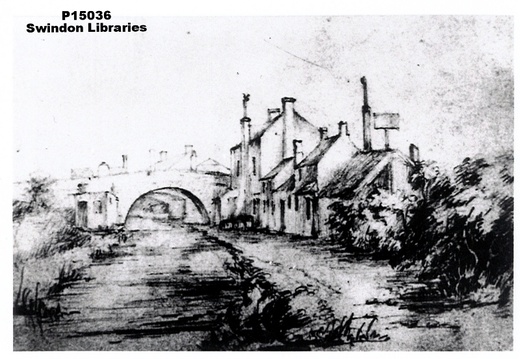
Crown Bridge/ Woodham's Bridge
body {font-family: arial; margin:1} p {text-align: left; padding: 0% 2%} Crown Bridge/ Woodham's Bridge, Public Houses & GWR Reservoir

Historic Map

Your browser does not support the audio element.

Crown bridge/ Woodham's bridge was a stone single arch access bridge, built between 1814-19 for the Canal Company.

This bridge was demolished sometime between 1885-99 when the adjacent railway bridge was widened.

Alongside the bridge were two pubs that faced onto the canal, the Locomotive Inn and Wholesome Barrel which was originally called the Crown Eating house, these buildings were owned by the canal company.

Further along the canal was an inlet to a Great Western Railway reservoir. GWR paid the canal company for water, which could only be taken between 12 o'clock each saturday and 12 o'clock the following monday.
Extracts from book called "Home Brewed" by David Backhouse

Wholesome Barrel
This was next door to, and to the north, of the Old Locomotive. It, too, was owned by the canal company. Samuel Harris, a dyer, was tenant in 1841 but quitted in June 1842 never having paid rent and leaving fittings in lieu. It was let to Rowdens from 1843 to 1848 at £12 per annum and then to Hitchcocks to May 1849 when it closed. It seems to have lain empty for a time and was let as a house in 1851. It was demolished some time after 1854.

Old Locomotive
This was the property of the Wilts and Berks Canal Company and was on the west bank of the North Wilts Canal (now a cycle track) just north of the railway bridge over the canal. A beerhouse. It opened before 1845 and may even have predated the GWR. At first it was known as the Crown Eating House and let to Rowdens of Highworth from 1845 at a rental of £14 per annum. In 1848 Rowdens were taken over by Hitchcock & Co. and the rent was reduced to £10 in 1850. In 1866 Thomas Hulbert took over the brewery and the Old Locomotive remained let to him until May 1888 when it was sold to the GWR, together with adjoining land, and demolished. Despite having been improved in 1872 the annual rental had fallen to £4.

Flight of 5 Locks
Flight of 5 Locks
body {font-family: arial; margin:1} p {text-align: left} Path along a lost flight of 5 Locks

Historic Map

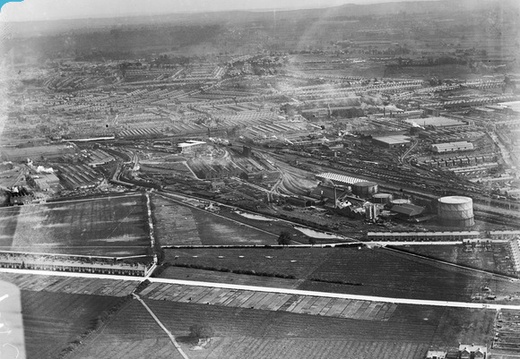
Logging into the "Britain from Above" website enables fullscreen viewing and zooming in and out.